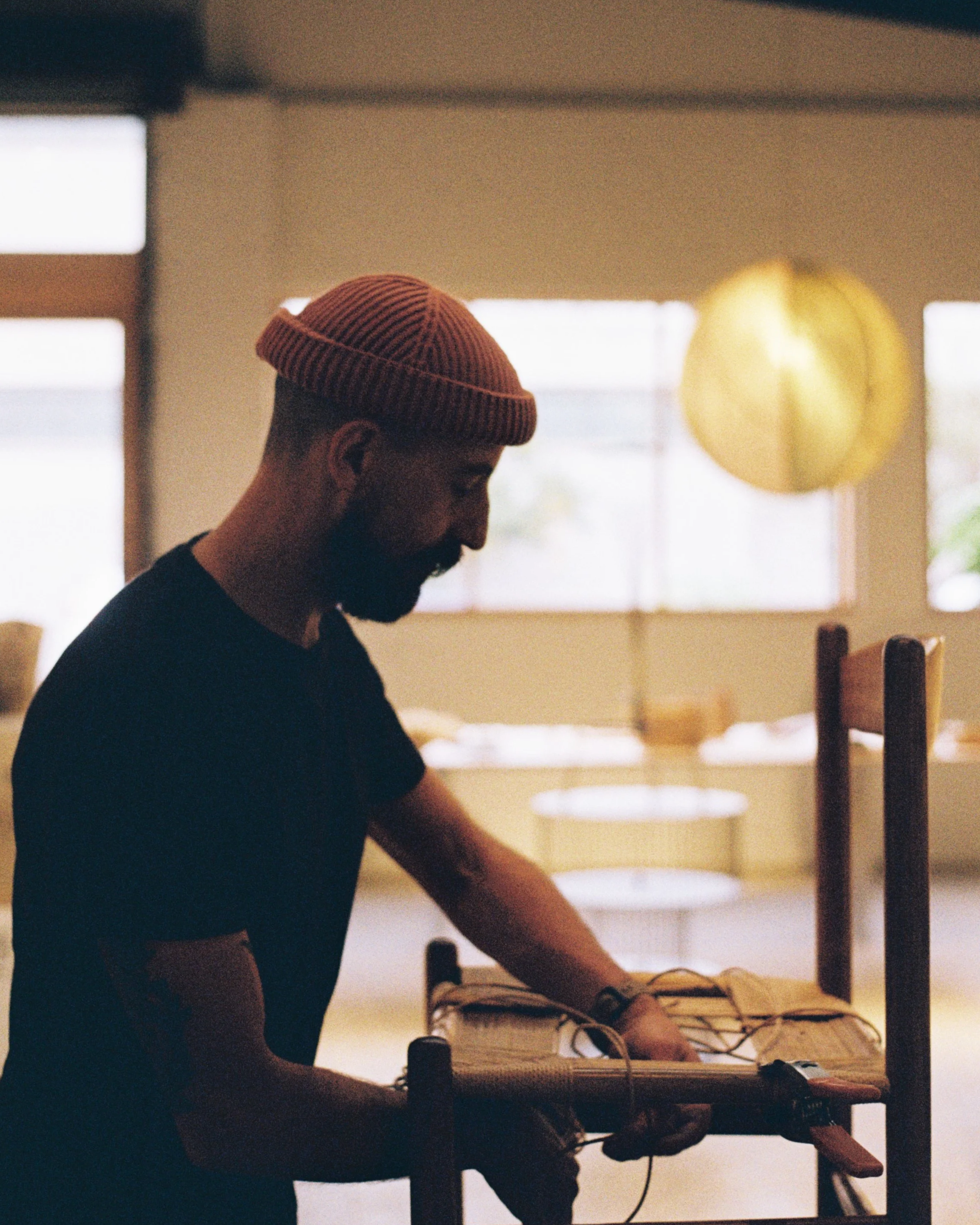
I design and make chairs for a living. I weave their seats too. Danish cord, by hand. That second part is where most people's questions start.
Doesn't that hurt your hands? Is it hard? Don't you get bored?

No, not anymore, and no.

The third question is the most interesting. There's an assumption behind it: that repetitive physical work is something to be endured, that the mind needs constant novelty to stay engaged, that if your hands are doing the same thing for hours boredom might creep in. I understand the assumption.

I get why people assume it. The idea of doing something physical and repetitive for hours on end and not watching the clock. It sounds more like a description of madness to many. But the pattern and the movement aren't the same thing. A Soviet physiologist named Bernstein spent decades studying blacksmiths and found that expert movement is never truly repeated; the outcome is consistent, but the path to it shifts every time. He called it repetition without repetition. Every row I weave is like that. Hundreds of small adjustments the hands make without consulting me: tension, angle, the slight give in one section of cord that wasn't there ten minutes ago. The hands are solving constantly. They just do it quietly.

That kind of solving only becomes possible after enough repetition has moved it below conscious attention. Early in learning a weave, the hands need supervision. Every pass, every adjustment to cord tension demands focus. There's no room for the mind to go anywhere. Boredom isn't the risk at that stage; overwhelm is. It's only once enough of that has been absorbed that the mind gets released. The question "don't you get bored?" assumes you're still in the early stage. Most people asking it have never moved past it.

There's also the rhythm of the work itself. Not just the finished seat every few hours, but the smaller units: each row completed, each pass through the warp where the cord lands exactly where it should. A constant stream of small confirmations that it's going well. I don't have to wait until the end to know.

The better my hand gets at that solving, the more skilled it becomes, and that becomes a pleasure in itself. The work gives my hands purpose while my mind goes to other tasks. The old chestnut of someone having their best ideas in the shower comes to mind. I've done it a million times, and that ease brings a certain wandering quality to the mind that feeds creativity.

Some of my best design thinking happens while I'm weaving. My hands are running on their own and my mind goes to that detail on a new chair I'm still not feeling (the backrest geometry that's good but not quite there). And then it comes to me. Sometimes I'll stop mid-weave and sketch the idea down or make a note, picking up where I left off as if there was never any interruption. The work doesn't interrupt my thinking, it's almost a necessary part of it.

Satisfaction comes often too. Another finished seat in front of me every few hours, a feeling of accomplishment in something I can hold in my hands. Something that will last its owner many years to come.